Our approach
This section explains our approach to reporting agency compliance with the this year.
The Oversight of Oranga Tamariki System Act 2022 requires us to report annually on compliance with the NCS Regulations for and in care. We do this through our annual Experiences of Care in report.
Agencies with compliance obligations under the NCS Regulations are those who have, or who previously had, custody or sole guardianship of tamariki and rangatahi under an Oranga Tamariki Act custody order or care agreement. For the reporting year, these agencies were Oranga Tamariki, Open Home Foundation, Barnardos Aotearoa and Kōkiri Marae Keriana Olsen Trust (Kōkiri Marae).
Like last year, this year’s report closely follows the structure of the NCS Regulations. This is different from our first cycle of three annual reports, which were structured around our outcomes framework.30 Aligning our report with the NCS Regulations makes it very clear to agencies what actions they need to take to improve compliance. Like our previous reports, this report shines a light on the experiences of tamariki and rangatahi in care and the impacts compliance and non-compliance with the regulations has on them.
This report has a particular focus on the experiences of tamariki and rangatahi who were cared for in group homes during the reporting period and the standard of care provided to them.
The voices of tamariki, rangatahi, and caregivers
During the reporting period, we spoke with significantly more tamariki and rangatahi, whānau, Oranga Tamariki kaimahi, and and NGO kaimahi who lived in, worked in or had whānau members residing in a group home than we did in previous years.
Compliance with the NCS Regulations directly impacts the experiences and outcomes of tamariki, rangatahi, whānau and caregivers. For this reason, their voices are central to our report and are highlighted in the use of quotes throughout the text.
Sometimes we use a quote to highlight an example of good practice in an area where the experience is primarily negative. Learning from these areas of good practice helps drive improvement.
Collecting and analysing data and information
Our approach to collecting and analysing the data and information remains the same as in previous years.
Our monitoring approach is based on a rigorous methodology with evidence at the centre. We use a mixed-methods approach – collecting qualitative information from the communities we visit and gathering quantitative data from agencies we monitor.
Analysis of the qualitative information enables us to validate and triangulate the quantitative data. It tells us about the quality of tamariki and whānau experiences from their own perspectives and helps us identify areas of good practice and areas for improvement.
As shown by other independent oversight and investigative bodies, including the Royal Commission of Inquiry into Historical Abuse in State Care and in the Care of Faith-based Institutions, quantitative data collected by agencies must be offset by hearing directly from tamariki and rangatahi, whānau, caregivers, NGO and iwi providers, and kaimahi involved in the oranga tamariki system. The stories and lived experiences of tamariki and rangatahi and their whānau, caregivers and community are at the centre of our monitoring approach.
We also receive information on agencies’ policies, strategies, funding and recruitment and updates on the commitments agencies have made in response to our previous reports. Further information about how we collect and analyse data is available on our website.31
We visit communities on a three-yearly cycle to ensure we get a range of regional perspectives and cover the motu (10 regions) every three years.
In the 12 months to 30 June 2025, we spoke with around 1,250 people about their experiences.
| & | 170 |
| 120 | |
| Whānau and non-whānau caregivers | 80 |
| Oranga Tamariki kaimahi | 315 |
| Open Home Foundation kaimahi | 20 |
| /Māori social service providers kaimahi | 130 |
| Non-government organisations kaimahi | 190 |
| Government agencies kaimahi | 220 |
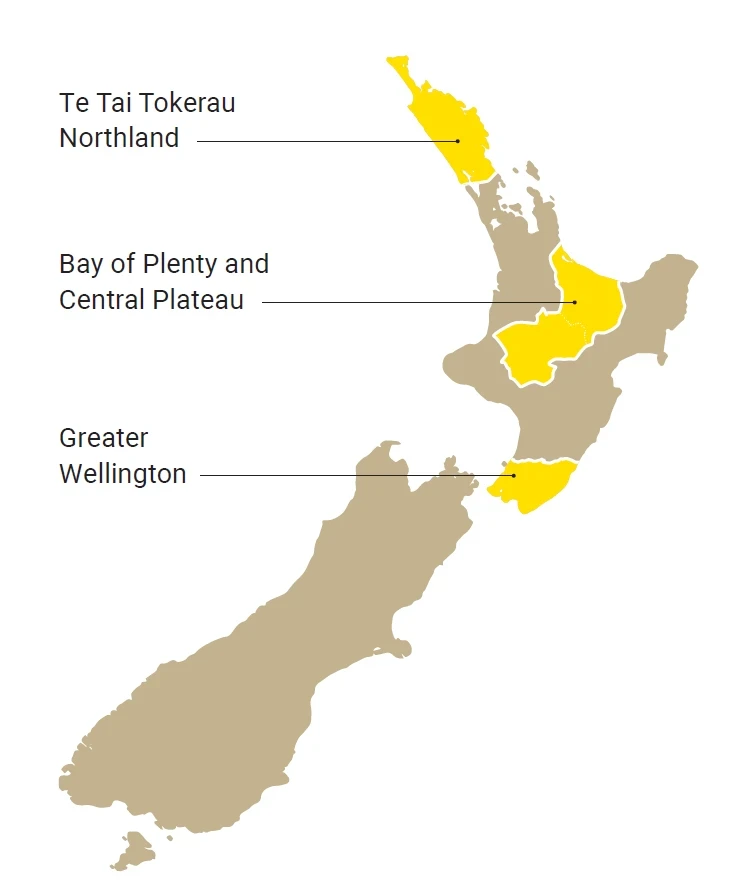
For this 2024/25 reporting period, we visited three regions . In the previous reporting period (2023/24), our monitoring cycle meant we visited four regions.
Agency commitments
Where agencies we monitor have committed to actions in response to our previous Experiences of Care in reports, we follow up to ask them how those commitments are progressing. Relevant information on previous commitments in response to our reports is included in the body of our report. Details of agency commitments are available on our website.32
Compliance tables
Data was requested from Oranga Tamariki and Open Home Foundation measuring compliance with each of the . We analyse this data to understand how compliance has changed over time, and where there is greatest need for improvement. We have included these measures in this report where they are relevant to our overall findings. Compliance tables containing the full set of measures provided in response to our request can be found on our website.33
We did not request data from Barnardos and Kōkiri Marae because of the small number of tamariki and rangatahi in their care. Instead, we asked them to a provide a narrative response to how the NCS Regulations were being met. As part of our monitoring of Oranga Tamariki, we also meet with Barnardos and Kōkiri Marae leadership and kaimahi in their capacity as shared-care partners.